
Uncategorized
What Are Growth Hormone Secretagogues? A Research Overview
Aug
What Are Growth Hormone Secretagogues? A Research Overview
Growth hormone secretagogues (GHSs) are a class of compounds that stimulate the release of growth hormone (GH) by interacting with specific biological pathways involved in endocrine signaling. Over the past three decades, these compounds have become an important area of laboratory investigation because they provide researchers with valuable tools for studying hormone regulation, receptor biology, metabolism, cellular communication, and peptide pharmacology.
Unlike growth hormone itself, secretagogues do not replace or supply the hormone directly. Instead, they are designed to activate naturally occurring physiological mechanisms that influence growth hormone secretion. This distinction has made them particularly useful for researchers seeking to better understand endocrine function and the complex signaling pathways that regulate hormone release.
Today, growth hormone secretagogues are widely studied in academic laboratories, biotechnology research, pharmaceutical development, and molecular biology programs. Researchers continue to investigate how these compounds interact with receptors, intracellular signaling pathways, and endocrine networks to better understand normal biological processes and potential future therapeutic applications.
This article is intended for educational and scientific purposes only. All peptides discussed are supplied exclusively for laboratory research and are not intended for human or veterinary use.
What Are Growth Hormone Secretagogues?
Growth hormone secretagogues are compounds that stimulate the release of endogenous growth hormone by activating specific receptors involved in the body’s natural hormone regulation systems. They include both synthetic peptides and small molecules developed to investigate how the endocrine system regulates growth hormone secretion.
Most peptide-based growth hormone secretagogues exert their biological activity through the Growth Hormone Secretagogue Receptor (GHS-R1a), commonly referred to as the ghrelin receptor. Activation of this receptor initiates a cascade of intracellular signaling events that ultimately promote growth hormone release from the anterior pituitary gland.
Unlike recombinant growth hormone, which introduces an external hormone into an experimental model, secretagogues activate existing biological pathways. This makes them valuable research tools for scientists studying receptor pharmacology, endocrine physiology, and peptide signaling.
Over time, researchers have developed several generations of growth hormone secretagogues with different receptor selectivity, molecular structures, and pharmacological characteristics. Each provides unique opportunities to investigate endocrine communication and receptor biology.
How Do Growth Hormone Secretagogues Work?
To understand growth hormone secretagogues, it is helpful to first understand how growth hormone is naturally regulated.
The endocrine system maintains growth hormone secretion through a highly coordinated communication network involving the hypothalamus, pituitary gland, and peripheral tissues. Multiple signaling molecules participate in this process, including:
- Growth Hormone-Releasing Hormone (GHRH)
- Somatostatin
- Ghrelin
- Growth Hormone (GH)
- Insulin-Like Growth Factor-1 (IGF-1)
These molecules work together through positive and negative feedback mechanisms to maintain hormonal balance.
Growth hormone secretagogues are designed to interact with this regulatory system by stimulating the GHS-R1a receptor, a receptor naturally activated by the hormone ghrelin.
Once activated, this receptor initiates intracellular signaling pathways that promote growth hormone secretion while also influencing broader endocrine communication. Researchers investigate these mechanisms to better understand receptor activation, ligand binding, peptide signaling, and endocrine regulation.
Importantly, different secretagogues exhibit varying degrees of receptor selectivity and biological activity. Some compounds are highly selective for GHS-R1a, while others interact with additional biological pathways, making comparative studies an important area of peptide research.
Understanding GHS-R1a Receptor Biology
One of the primary reasons growth hormone secretagogues continue to attract scientific interest is their interaction with the Growth Hormone Secretagogue Receptor Type 1a (GHS-R1a).
GHS-R1a is a G protein-coupled receptor (GPCR) expressed primarily within the hypothalamus and anterior pituitary, although it is also found in several peripheral tissues. It serves as the primary receptor for ghrelin, a naturally occurring peptide hormone involved in appetite regulation, energy balance, and endocrine signaling.
When a growth hormone secretagogue binds to GHS-R1a, the receptor undergoes structural changes that activate intracellular messenger systems. These signaling pathways regulate cellular communication and contribute to the physiological processes researchers study in experimental models.
Because GHS-R1a belongs to the large GPCR family—one of the most extensively studied receptor families in pharmacology—it has become an important target for investigating receptor activation, ligand specificity, and peptide-receptor interactions.
Another reason researchers focus on GHS-R1a is that different secretagogues demonstrate different receptor-binding characteristics. For example, <mark>Ipamorelin</mark> has been widely studied for its high receptor selectivity, while <mark>Hexarelin</mark> exhibits a different pharmacological profile that may involve additional biological interactions. These distinctions help researchers compare receptor activation patterns and signaling pathways under controlled laboratory conditions.
Scientists also investigate how GHS-R1a communicates with other endocrine pathways, including those involving Growth Hormone-Releasing Hormone (GHRH) and Insulin-Like Growth Factor-1 (IGF-1). Understanding these interconnected systems provides valuable insight into endocrine physiology and molecular signaling.
As research advances, the GHS-R1a receptor continues to serve as a cornerstone of peptide pharmacology, receptor biology, and endocrine science, making growth hormone secretagogues an important class of compounds for laboratory investigation.
Related Research Peptides
Throughout this guide, we will discuss several research peptides that interact with the growth hormone axis. You can explore these products for additional technical information:
These product pages provide more detailed information about each compound’s research profile, mechanism of action, and laboratory applications.
Growth Hormone Signaling Pathway
Understanding the growth hormone signaling pathway is essential for researchers studying endocrine regulation and peptide pharmacology. Growth hormone secretion is not controlled by a single hormone or receptor. Instead, it is regulated through a sophisticated communication network known as the Growth Hormone–Insulin-Like Growth Factor (GH–IGF-1) axis.
The process begins in the hypothalamus, where specialized neurons release Growth Hormone-Releasing Hormone (GHRH). GHRH travels to the anterior pituitary gland and stimulates somatotroph cells to release growth hormone into circulation.
At the same time, another hypothalamic hormone, somatostatin, acts as a natural inhibitor by reducing growth hormone secretion. This balance between stimulation and inhibition helps maintain endocrine homeostasis.
A third regulator, ghrelin, provides another level of control. Produced primarily in the stomach, ghrelin binds to the Growth Hormone Secretagogue Receptor (GHS-R1a) and stimulates growth hormone release through a mechanism distinct from GHRH. This is the biological pathway that peptide-based growth hormone secretagogues are designed to investigate.
Once growth hormone enters circulation, it stimulates the production of Insulin-Like Growth Factor-1 (IGF-1), primarily in the liver and other peripheral tissues. IGF-1 then influences numerous cellular processes, including growth, metabolism, differentiation, and protein synthesis. Researchers continue to study this signaling network to better understand endocrine physiology and receptor interactions.
Understanding the GH–IGF-1 axis allows scientists to evaluate how different peptide secretagogues influence receptor activation, hormone secretion, and downstream signaling without administering recombinant growth hormone directly.
Types of Growth Hormone Secretagogues
Growth hormone secretagogues can be divided into several categories based on their molecular structure, receptor selectivity, and research applications.
Peptide-Based Growth Hormone Secretagogues
Peptide secretagogues are synthetic amino acid sequences designed to interact with the GHS-R1a receptor. Because of their receptor specificity and predictable pharmacological characteristics, they are widely used in laboratory research.
Some of the most extensively studied peptide secretagogues include:
Each peptide possesses unique biological properties that make it valuable for investigating different aspects of endocrine signaling.
Ipamorelin
Among modern growth hormone secretagogues, Ipamorelin is recognized for its high degree of selectivity toward the GHS-R1a receptor. Researchers frequently use it when studying receptor pharmacology because it produces targeted receptor activation with minimal interaction with other endocrine pathways.
Its selectivity has made Ipamorelin a valuable research tool for investigations involving:
- Growth hormone secretion
- Receptor pharmacology
- Endocrine signaling
- Peptide pharmacokinetics
- Hormone regulation
Because of these characteristics, Ipamorelin remains one of the most widely researched peptide secretagogues in endocrine laboratories.
Hexarelin
Hexarelinis another extensively investigated growth hormone secretagogue that has attracted scientific interest due to its high biological potency and distinct receptor profile.
Compared with some other secretagogues, Hexarelin has demonstrated broader biological activity in laboratory studies, making it useful for researchers examining endocrine regulation, cardiovascular biology, receptor signaling, and peptide pharmacology.
Its unique characteristics allow scientists to compare receptor activation patterns across different peptide families and evaluate variations in downstream signaling pathways.
CJC-1295 DAC
CJC-1295 DAC belongs to the family of Growth Hormone-Releasing Hormone (GHRH) analogs. Rather than acting directly on the GHS-R1a receptor, it mimics the biological activity of endogenous GHRH, stimulating growth hormone release through the pituitary gland.
The addition of Drug Affinity Complex (DAC) technology extends the peptide’s circulating half-life, allowing researchers to investigate sustained endocrine signaling over longer experimental periods.
Researchers commonly study CJC-1295 DAC in laboratory investigations involving:
- Endocrine physiology
- Hormone pulsatility
- GHRH receptor biology
- Long-acting peptide pharmacology
- Growth hormone regulation
Its prolonged biological activity makes it distinct from shorter-acting peptide secretagogues.
CJC-1295 No DAC
While structurally related to its long-acting counterpart, CJC-1295 No DAC was designed to maintain a shorter biological duration.
This shorter activity profile allows researchers to investigate natural pulsatile growth hormone secretion rather than prolonged receptor stimulation.
Scientists frequently compare CJC-1295 DAC and No DAC to better understand:
- Hormone pulse frequency
- Receptor activation timing
- Pharmacokinetics
- Endocrine regulation
- Growth hormone dynamics
These comparative studies contribute valuable insights into peptide pharmacology and endocrine biology.
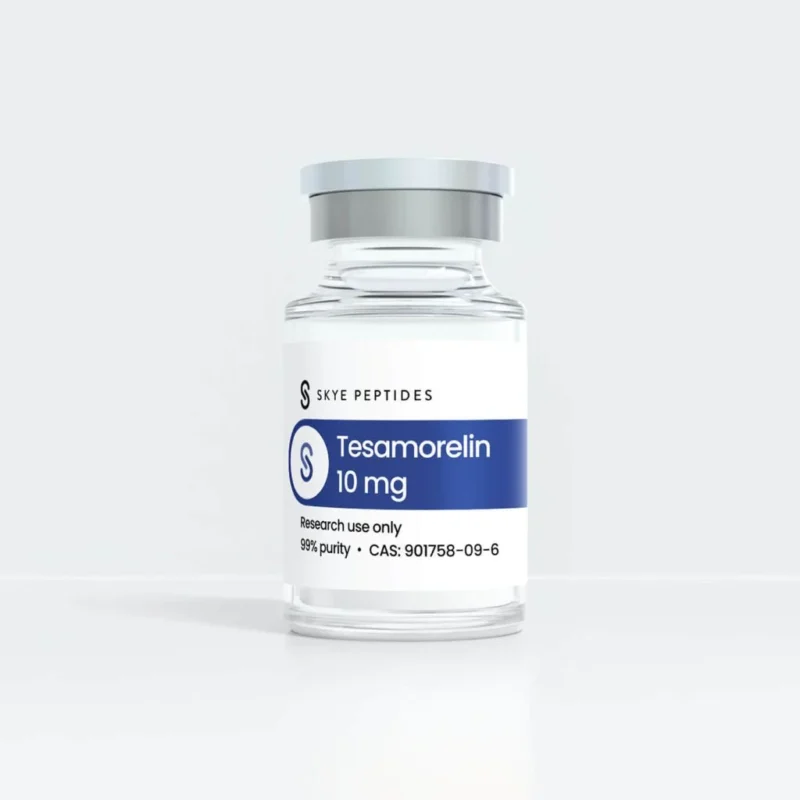
Tesamorelin
Tesamorelin is another synthetic analog of Growth Hormone-Releasing Hormone that has become an important research peptide within endocrinology.
Unlike peptide secretagogues that directly activate the GHS-R1a receptor, Tesamorelin primarily stimulates growth hormone release by interacting with GHRH receptors.
Researchers investigate Tesamorelin in laboratory models involving:
- Growth hormone physiology
- Metabolic regulation
- Endocrine signaling
- Cellular metabolism
- Hormone receptor biology
Because it utilizes a different biological pathway than GHS-R1a agonists, Tesamorelin provides researchers with an additional model for comparing endocrine signaling mechanisms.
Comparing Common Growth Hormone Secretagogues
| Research Peptide | Primary Research Focus | Biological Target |
| Ipamorelin | Selective GH secretion research | GHS-R1a |
| Hexarelin | Endocrine signaling and receptor biology | GHS-R1a |
| CJC-1295 DAC | Long-acting GHRH analog research | GHRH Receptor |
| CJC-1295 No DAC | Pulsatile GH release research | GHRH Receptor |
| Tesamorelin | Growth hormone physiology research | GHRH Receptor |
Although these peptides are often discussed together, each represents a distinct research tool with unique pharmacological characteristics. Researchers select specific compounds based on their experimental objectives, receptor targets, and study design rather than assuming they are interchangeable.
Why Do Researchers Study Growth Hormone Secretagogues?
Growth hormone secretagogues continue to receive significant attention in scientific research because they provide valuable tools for studying the body’s natural endocrine signaling pathways. Rather than supplying growth hormone directly, these compounds allow researchers to investigate how the body regulates hormone secretion through receptor-mediated mechanisms.
Over the past several decades, laboratory studies have explored growth hormone secretagogues in multiple areas of biomedical science, including:
- Endocrine physiology
- Receptor pharmacology
- Peptide chemistry
- Molecular biology
- Cellular signaling
- Metabolic research
- Aging biology
- Exercise physiology
One of their greatest advantages in research is that different secretagogues interact with different components of the growth hormone axis. Some primarily activate the Growth Hormone Secretagogue Receptor (GHS-R1a), while others mimic the biological activity of Growth Hormone-Releasing Hormone (GHRH). This diversity allows researchers to compare signaling pathways, receptor activation, and downstream biological responses under controlled laboratory conditions.
As scientific understanding of peptide biology continues to evolve, growth hormone secretagogues remain valuable research compounds for investigating hormone regulation and receptor function. While many findings from laboratory studies are promising, much of the evidence is still preclinical, and further investigation is necessary to better understand these complex biological systems.
Frequently Asked Questions
What is a growth hormone secretagogue?
A growth hormone secretagogue is a compound that stimulates the body’s natural release of growth hormone by activating specific biological pathways involved in endocrine regulation. Most peptide secretagogues interact with the Growth Hormone Secretagogue Receptor (GHS-R1a), while others act through Growth Hormone-Releasing Hormone (GHRH) receptors.
Are growth hormone secretagogues the same as growth hormone?
No.
Growth hormone secretagogues do not contain or replace growth hormone. Instead, they stimulate biological mechanisms that influence the release of endogenous growth hormone. This distinction makes them valuable tools for studying endocrine physiology and receptor biology.
What is the GHS-R1a receptor?
The Growth Hormone Secretagogue Receptor Type 1a (GHS-R1a) is a G protein-coupled receptor that serves as the primary receptor for ghrelin, a naturally occurring hormone involved in appetite regulation and growth hormone secretion.
Many peptide secretagogues are designed to activate this receptor in laboratory research.
Which growth hormone secretagogues are commonly studied?
Some of the most widely investigated peptide secretagogues include:
Each peptide has unique pharmacological characteristics that make it suitable for different research objectives.
Why do researchers compare different secretagogues?
Different growth hormone secretagogues exhibit variations in receptor selectivity, pharmacokinetics, biological activity, and signaling pathways. Comparing these characteristics helps researchers better understand endocrine regulation and peptide pharmacology.
Are growth hormone secretagogues approved for human use?
This article discusses peptide compounds in the context of scientific and laboratory research. Product-specific regulatory status varies depending on the compound, jurisdiction, and intended use. Researchers should always review applicable regulations and manufacturer guidance before working with any research material.
What is the difference between GHRH analogs and GHS-R1a agonists?
Although both categories influence growth hormone secretion, they do so through different biological pathways.
GHRH analogs, such as Tesamorelin and CJC-1295, primarily act on GHRH receptors.
GHS-R1a agonists, including Ipamorelin and Hexarelin activate the Growth Hormone Secretagogue Receptor.
Understanding these differences helps researchers design more targeted experimental studies.
Key Takeaways
Growth hormone secretagogues represent an important class of research compounds that continue to advance scientific understanding of endocrine regulation and peptide biology.
Rather than functioning as substitutes for growth hormone, these compounds provide researchers with valuable tools for investigating receptor activation, hormone signaling, and cellular communication.
As laboratory research continues to expand, studies involving Ipamorelin, Hexarelin, CJC-1295 DAC, CJC-1295 No DAC, Tesamorelin, and IGF-1 LR3 will continue contributing to our understanding of peptide pharmacology and endocrine science.
For researchers entering this field, understanding the relationship between GHS-R1a receptors, GHRH signaling, and the GH–IGF-1 axis provides an essential foundation for interpreting both current literature and future scientific developments.
Explore Related Research Peptides
To learn more about individual compounds discussed in this guide, explore the following research peptide pages:
These resources provide detailed information about each peptide’s research profile, mechanism of action, laboratory applications, and product specifications.
Conclusion
Growth hormone secretagogues have become an integral part of modern peptide research because they enable scientists to investigate the body’s natural mechanisms for regulating growth hormone secretion. By studying how these compounds interact with receptors, hormones, and intracellular signaling pathways, researchers continue to expand our understanding of endocrine physiology, peptide pharmacology, and molecular biology.
Whether the focus is receptor biology, hormone regulation, or peptide signaling, growth hormone secretagogues provide a valuable framework for exploring one of the body’s most complex endocrine systems. As new discoveries emerge, these compounds will likely remain at the forefront of laboratory research into hormone signaling and cellular communication.
Research Use Only Disclaimer
The information presented in this article is intended solely for educational and scientific purposes. The peptides discussed are supplied exclusively for laboratory research and development. They are not intended for human consumption, therapeutic use, veterinary use, or diagnostic procedures. Researchers are responsible for complying with all applicable laws, institutional guidelines, and regulatory requirements.
